Want to sell your facilities maintenance business? Start with a clear picture of the work. Show what your team does, who needs the owner’s help and where the records live.
You do not need a perfect folder to start a conversation with us. A short, honest outline is a useful first step. Tell us what is ready and what still needs a check.
Start with six plain answers
- The work: What trades do you cover? Where do you work? What do your own crews do, and what goes to trade partners?
- The customers: Who calls you again? How much work comes from your largest customer? Use customer types in the first form, not a private customer list.
- The people: Who runs the day? Which choices still need the owner?
- The books: Which months do your sales and earnings cover? Keep sales, profit and cash collected apart.
- The records: Where are the job notes, photos, open work and bills?
- Your plans: Why are you thinking of selling? What timing and role would you like to discuss?
Our investment criteria explain what we look for. Your answers help us learn whether a next conversation makes sense. They are not a price or a promise to buy.
Pick one recent job and follow it through
One job cannot prove the health of a whole business. It can show how the records connect. Pick a job your team knows well. Find the request, the assigned visit, the work note, the photos and the bill’s current step.
For example, Masterline Facilities fixed a gasket at a restaurant’s three-compartment sink on October 12, 2026. The note names the part changed and says the tech filled the basin and found no leak. The job moved to ready to bill on October 19. No linked invoice or payment record was present when we checked it on October 21.
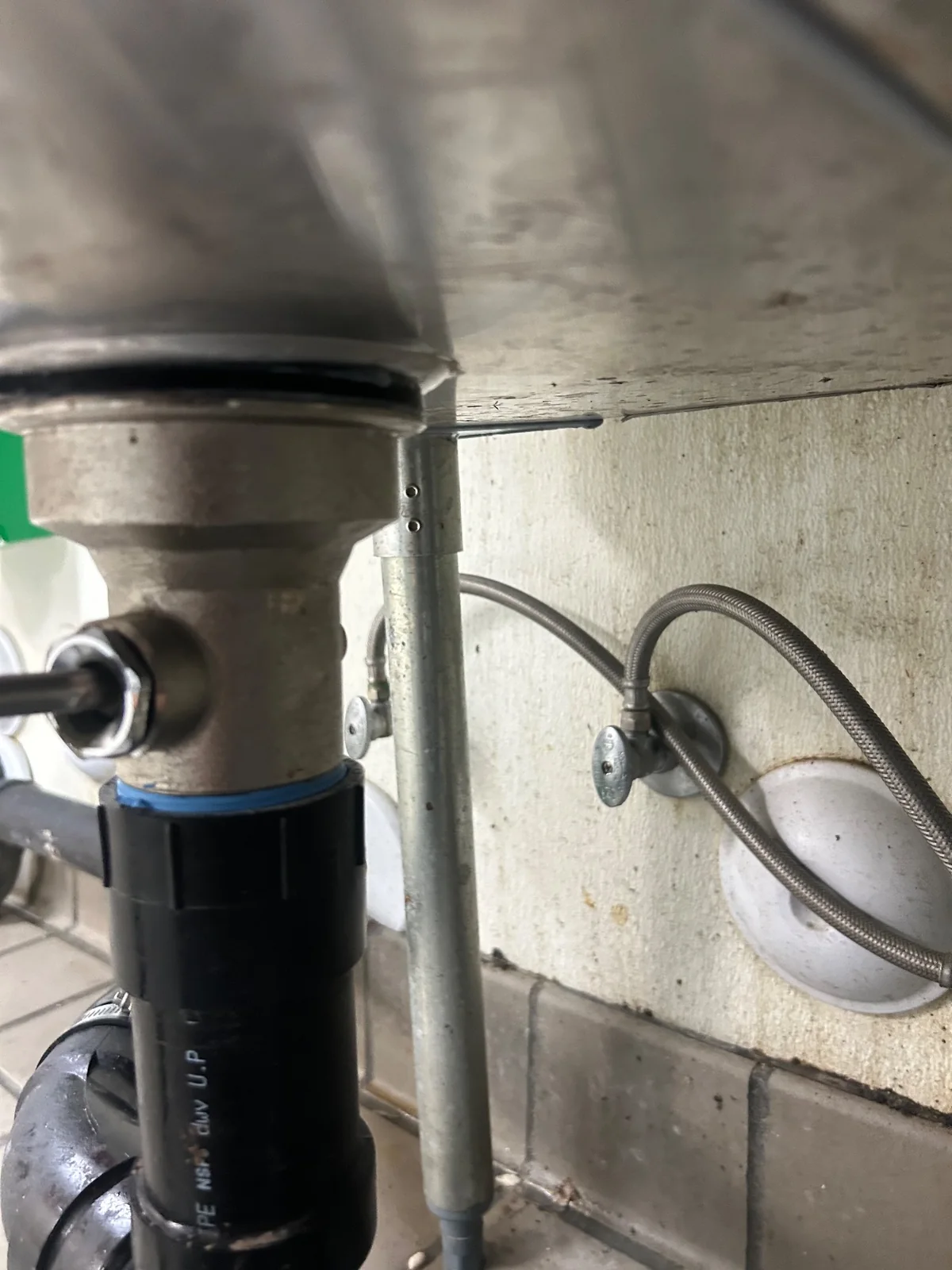
The full sink repair case shows the actual work and photos. Here, the lesson for a seller is simple: keep the field result and the bill’s status clear. A repair can be done while office work remains.
Use this job record checklist
| Record | What it should help explain |
|---|---|
| Request | What did the customer ask for, and when? |
| Visit | Who went, and when was the work done? |
| Work note and photos | What was found, changed and checked? |
| Open work | Is a return trip, part or approval still needed? |
| Bill | Is it ready to bill, sent, still open or paid? Which record supports that step? |
Do this for a small mix of jobs, including ones with open questions. Do not use one good job as proof that every job went well. If records do not match, flag the gap.
Show what relies on you
List the tasks only the owner can do today. Who quotes unusual work? Who handles a customer problem? Who knows where old records are kept?
Write down the current roles. Future jobs, pay, deal terms and the seller’s role need their own discussion. The NCRC story shows one real step we have taken. It does not promise the same plan for every business.
Keep the first step small and private
Use the first form to describe the business. Do not send customer lists, bank details, employee files or tax returns there. If talks move forward, agree on what to share and how to share it.
This checklist helps you get ready for a conversation. It does not set a value, deal terms or a tax plan. Get qualified advice for those decisions.
Where IQ fits
We use MIQ to keep requests, visits, notes, photos and office steps with each job. Our sink example shows those saved steps through ready to bill. It does not show a payment or measured savings.
You do not need to use MIQ to tell us about your business. We want to understand your people, customers and work first. MIQ is our internal tool; it is not for sale.
MasterlineIQ (MIQ) was built by Tim Yslava for the family’s businesses. IQ keeps the records together. The techs do the field work. People check the work and the bill.
Thinking about selling?
Tell us about your facilities maintenance business. Share the basics and what you want next. We will review the fit before discussing further steps.
The job example uses saved service notes, visit records and matched photos reviewed October 21, 2026. Customer names, exact locations and private terms are omitted.